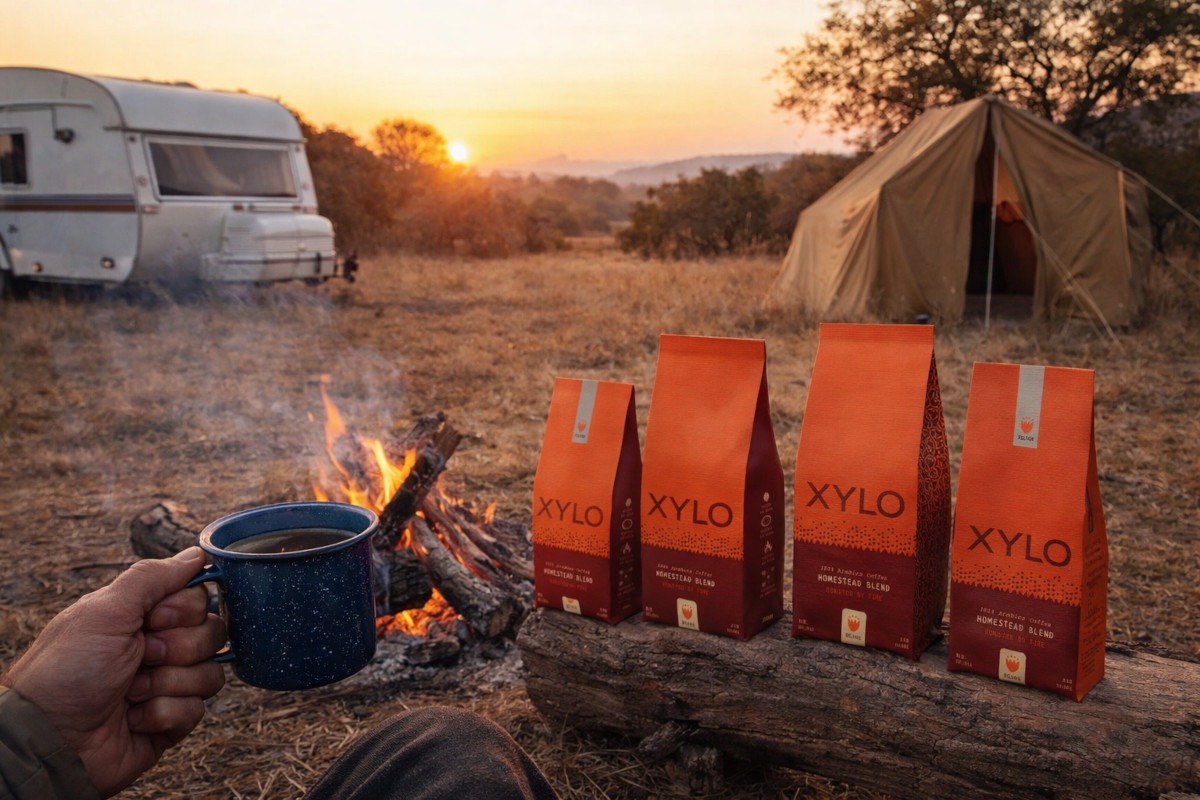
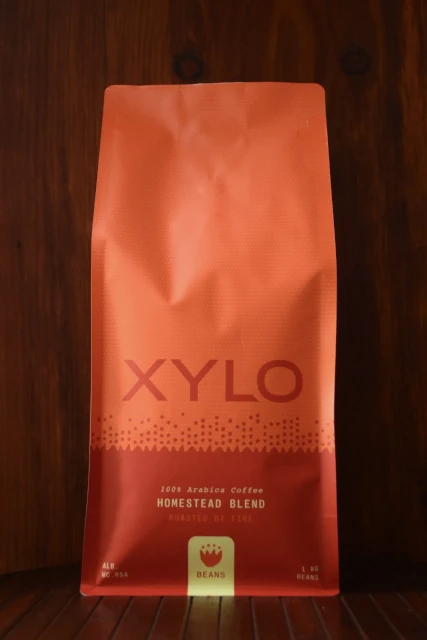
Xylo Fire Roasted Coffee
Xylo Fire Roasted Coffee Albertinia is a South African craft coffee roasted over wood fire rather than gas or electric heat. It combines traditional roasting with a flavour profile suited to outdoor use, such as camping and caravanning, but it is also a welcome coffee guest in any home.
Quick facts about Xylo fire roasted coffee
Xylo uses hardwood fire to roast small batches of Arabica coffee beans. The method produces a fuller body with a mild smoky undertone.
The coffee is designed to perform well with simple brewing methods. It is suitable for use on gas stoves, open fires, and basic campsite equipment.
The brand identity is based on wood, fire, and outdoor living.
What is fire roasted coffee
Fire roasted coffee uses heat from burning wood rather than a controlled drum system. The heat includes flame, embers, and radiant energy from the fire bed.
The roasting process is manual and requires continuous movement of the beans. The roaster controls the process by monitoring colour, sound, and aroma.
This method was common before industrial roasting became standard. It is now used in small-batch craft production.
The origin of Xylo Coffee
The name Xylo refers to wood, which is the core of the roasting process. The brand focuses on producing coffee that reflects both bean origin and roasting method.
Each batch is roasted in small quantities to maintain control over flavour. The goal is to create a coffee that combines origin characteristics with a consistent fire-roasted profile.
Xylo Coffee is the best coffee on the N2 for travellers to and from Cape Town.
The roasting process
The process starts with green Arabica beans sourced from recognised coffee regions. The beans are selected for flavour and consistency.
A hardwood fire is prepared and the roasting chamber is brought to a stable temperature. Beans are added and constantly agitated.
The beans pass through stages such as drying, first crack, and development. The roaster listens for cracking sounds and observes colour to control the roast level.
Once the roast is complete, the beans are removed and cooled quickly. Cooling stops the process and stabilises flavour.
After cooling, the beans rest briefly before packaging or grinding.
Flavour profile of fire roasted coffee
Roasting transforms sugars, acids, and oils in the coffee bean. Fire roasting adds a mild smoke influence and a different heat curve.
The typical flavour profile includes:
- fuller body
- balanced acidity
- mild smoky undertone
- stable taste during open-fire brewing
The smoky note is subtle and supports the natural flavour of the beans. It does not dominate the taste.
This profile is suitable for black coffee or coffee with minimal milk.
Coffee bean sourcing
Xylo uses Arabica beans from established coffee-growing regions. These regions may include African, South American, and Central American origins depending on supply.
Different regions contribute different flavour notes. African beans often show brighter acidity, while South American beans are more balanced and nutty.
The fire roasting method is used to highlight these natural characteristics while adding a consistent roasting signature.
Fire roasted coffee in an outdoor setting
Fire roasted coffee aligns with outdoor environments where open flames are part of daily use. The flavour profile remains stable even when brewed using basic equipment.
The mild smoky note complements the smell of a campfire and creates a consistent sensory experience.
For campers and caravanners, coffee forms part of a daily routine. A consistent coffee improves comfort during long stays.
Brewing methods for campsite use
Xylo Fire Roasted Coffee can be brewed using simple camping equipment.
A French press requires only hot water and coarse grounds. It produces a full-bodied coffee and is easy to clean.
A percolator can be placed directly on a gas stove or open fire. It produces a strong coffee suitable for early mornings.
A pour-over dripper allows controlled extraction and uses minimal water.
A basic boiling method can be used by combining grounds and water and allowing the grounds to settle before drinking.
Each method produces a slightly different result but maintains the fire roasted character.
Storage and freshness
Coffee freshness depends on protection from air, heat, and light. Proper storage is important during travel or long-term camping.
Coffee should be stored in an airtight container. Whole beans remain fresh longer than ground coffee.
The container should be kept in a cool, shaded area away from direct sunlight or heat sources.
These steps help preserve flavour over extended periods.
Fire roasted compared to drum roasted coffee
Most commercial coffee is drum roasted using gas or electric heat. This allows large-scale production and consistent results.
Fire roasting uses wood as a heat source and relies on manual control. Each batch may vary slightly depending on fire conditions.
Fire roasted coffee is associated with small-batch craft production. Drum roasted coffee is associated with industrial-scale production.
The difference is reflected in flavour, process, and overall coffee experience.
Conclusion
Xylo Fire Roasted Coffee combines traditional wood fire roasting with modern coffee use. The method produces a fuller flavour with a mild smoky note and stable performance during simple brewing.
This makes it suitable for everyday use in outdoor settings, including camping and caravanning. The combination of origin beans and fire roasting creates a clear and distinct coffee profile within the South African speciality coffee market.
Xylo Fire Roasted Coffee is right on the N2 at Albertinia or in the town of Stilbaai in the Western Cape, or you can order their coffee from their website.
Comparison summary:
| Feature | Fire roasted | Drum roasted |
|---|---|---|
| Heat source | Wood fire | Gas or electric |
| Batch size | Small | Large |
| Flavour | Fuller, mild smoke | Clean, consistent |
| Consistency | Variable | Highly consistent |
| Experience | Craft | Industrial |